

Anglian Water has opened a new office in Norwich, as record investment into the county’s water and sewerage infrastructure continues.
Between 2025 and 2030, Anglian Water is delivering its largest ever programme of investment across the East of England, with upgrades and new infrastructure worth £11 billion.
Norfolk is a hotspot for the programme, with the county set to benefit from around £1 billion of investment by 2030.
Investment delivered to overhaul Norfolk’s water and sewerage infrastructure by 2030 will include:
Major upgrades at Whitlingham Water Recycling Centre, which treats the wastewater for the wider Norwich area, to accommodate the city’s population growth
Improvements to reduce storm overflow spills across the county, including at Caister, Wymondham, Great Yarmouth and Norwich, protecting Norfolk’s precious natural environment and coastline
Key sections of Anglian Water’s flagship strategic pipeline, which will transport water from wetter parts of the company’s region in the north, to the drier areas in the south and east – such as Norfolk – that need it most.
These investments would help keep taps running for customers in Norfolk for years to come, protect some of the sensitive habitats around the Broads, and help the region to prosper.
The East of England is one of the driest parts of the UK, but also one of the fastest growing, with more than 720,000 new residents expected to move to the region by 2043.
Research has shown that over the same period, temperatures in Norfolk are set to increase by more than the national average as rainfall hits record low and the county is likely to see more extreme weather.*
Anglian’s plan is designed to deliver the investment needed to prepare the region for this level of growth, as well as navigating the challenges, extremes and uncertainties that climate change will bring.
At a local level, data suggests that developing a skilled workforce to respond to a changing climate will be Norfolk’s biggest challenge over the next two decades.*
There is a huge opportunity to expand the renewable energy sector in the county, and with a growing population and increasingly extreme weather, investment into the county’s water and sewerage infrastructure will be vital to protect Norfolk’s customers and environment.
Norfolk’s largely agricultural workforce today means there’s a need for more people with the right skills, as the requirement for environmental infrastructure increases.
Anglian Water and its @one Alliance already have more than 700 employees who live in Norfolk and commute to existing offices in Cambridgeshire. The new Norwich hub offers a better work-life balance for employees, alongside closer connections to key local investment schemes.
The East of England will be home to several major infrastructure projects over the next decade, including Sizewell C, the new Universal Studios theme park, and Anglian Water’s two proposed new reservoirs, in the Fens and Lincolnshire.
To take advantage of these economic opportunities and deliver at scale, the region needs the right skills pipeline – bringing people in, developing them properly, and building long‑term careers.
The water company hopes this new local base will help attract Norfolk-based candidates for the hundreds of new roles it will need to recruit to deliver its plans across the East of England.
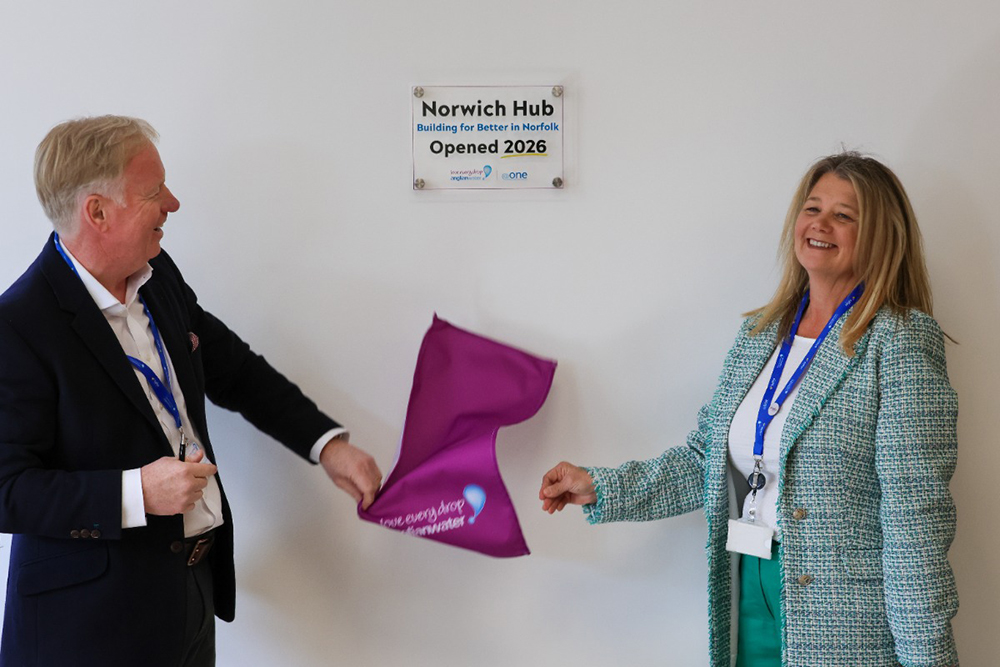
The new hub was opened by Anglian’s CEO Mark Thurston at a ceremony attended by local stakeholders from the Norfolk Chambers of Commerce, University of East Anglia and local government, as well as senior leaders at the water company.
Nova Fairbank, CEO of Norfolk Chambers of Commerce, said: “The new Norwich hub shows a clear commitment to the county and will support long term growth, resilience and opportunity for local businesses and communities.”
*Anglian Water’s Thriving East report, 2023, draws on publicly available information (for example ONS data, Met Office forecasting, Department for Business, Energy and Industrial Strategy) to create an index that pulls together disparate data sources to create a unique measure of risk and opportunity for an area.