
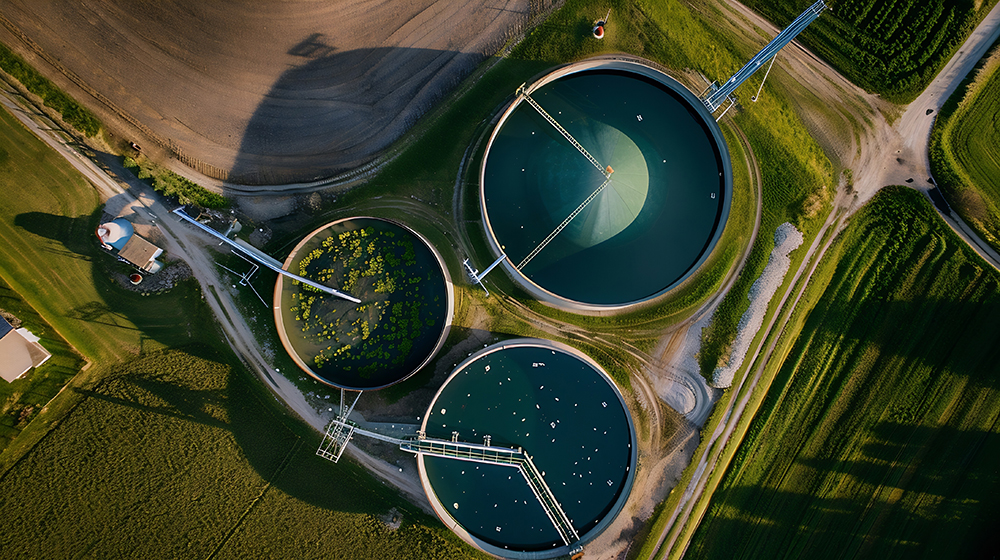
A total of 38 applications have been lodged to build new or expand existing UK biomethane plants, representing one of the most substantial surges yet in new UK capacity of this renewable energy.
Cadent, the UK’s largest gas distribution network, is now assessing these applications against its new ‘clustering’ approach.
The applications span Cadent’s UK area of operations, with 17 in the East of England, 13 in East Midlands, five in West Midlands and three in the North West.
This is the first set of projects to come forward under Cadent’s Ofgemsupported costsharing model, designed to reduce financial barriers by enabling developers in constrained areas to cluster and share reinforcement costs.
If taken forward, the projects would represent one of the most significant collective expansions of UK biomethane capacity to date.
Cadent already has 47 biomethane sites connected to its networks, delivering four terawatt hours (TWh) of energy, which equates to the annual gas usage of 351,000 homes. The company is aiming to grow this to 20TWh by 2035 – the annual gas usage of 1.8 million homes.
Biomethane is renewable energy because it is derived from continually replenished organic materials, including agricultural residues, sewage and food waste. It is increasingly seen as one of the practical, near-term options available to support the UK’s wider transition away from fossil-based energy sources.
Howard Forster, Cadent, said: Biomethane is a proven technology – it’s here now, delivering real carbon savings today, and it will be a major part of our energy future.
“To see 38 applications arrive in this first window shows the level of confidence developers have in the sector and in the new approach we’ve introduced. This is one of the strongest indications yet that the market is ready to grow at scale.
“Our costsharing, clustering model is doing exactly what it was designed to do: removing barriers, driving coordination, and helping more projects progress.
“We’re committed to working with developers to turn as many of these applications as possible into operational plants supplying lowcarbon biomethane into our networks.”
Cadent’s Network Analysis teams are reviewing the applications to identify opportunities for clustering and to confirm reinforcement requirements at each location.
Developers will receive indicative reinforcement costs shortly before choosing whether to progress to the next phase.
The company says the response demonstrates strong, sectorwide momentum behind biomethane and the effectiveness of targeted reforms in unlocking new renewable gas capacity.
Earlier this year, Cadent confirmed that the cumulative amount of biomethane to enter its gas network had exceeded 1.5 billion cubic metres.
Although the first application window is now closed, Cadent plans to hold more.