


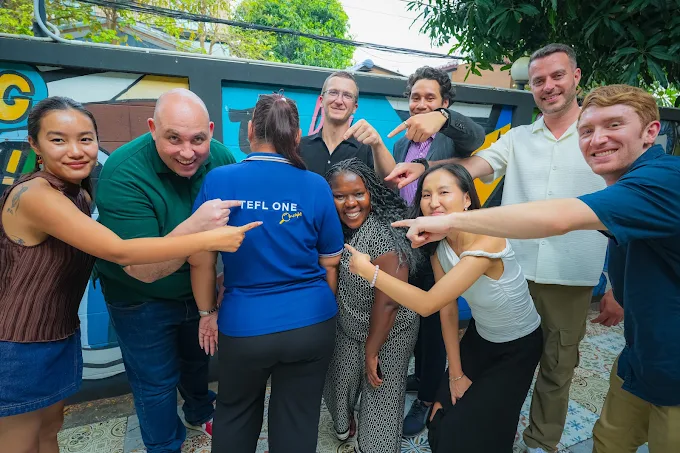
Teaching in Thailand can offer more than the opportunity to experience life in another country. For those willing to step outside their comfort zone, it can provide practical work experience, transferable skills and an opportunity to develop professionally while working in a completely different environment.
When people think about working abroad, the conversation often centres around travel, lifestyle and experiencing a new culture. While these can certainly be part of the appeal, working overseas can also provide something much more valuable: the opportunity to develop professionally in an unfamiliar environment.
For those choosing to teach English in Thailand, the experience can combine a new way of life with genuine responsibility, professional development and skills that can remain valuable long after their time in the classroom comes to an end.
More Than Simply Seeing a Different Country
There is an obvious difference between visiting a country and living and working there.
Working in Thailand means becoming part of a local environment and adapting to different expectations, routines and ways of communicating. For teachers, this means becoming part of a school community and taking responsibility for the learning and development of students.
That experience can challenge people in ways that a conventional workplace environment may not.
It requires flexibility, independence and a willingness to approach unfamiliar situations with an open mind.
Developing Skills That Employers Value
Teaching is often associated primarily with education, but the skills developed in the classroom can extend far beyond the profession itself.
Teachers need to communicate clearly, manage their time, organise their workload and adapt their approach depending on the people they are working with. They also need patience, problem-solving skills and the confidence to make decisions independently.
Teaching children in a different cultural and educational environment can strengthen these skills further.
For someone starting their career, changing direction or simply looking to broaden their professional experience, this can provide an opportunity to develop capabilities that are transferable to a wide range of future roles.
Learning to Adapt
One of the biggest benefits of working overseas is learning how to operate outside familiar surroundings.
Moving to another country and stepping into a new workplace requires adaptability. Processes may be different. Communication styles may be different. The expectations placed on employees may be different.
Rather than seeing these differences as obstacles, they can become part of the learning experience.
Over time, navigating unfamiliar situations can build confidence and independence — qualities that can be difficult to develop through qualifications alone.
Understanding Different Cultures
Teaching in Thailand also provides the opportunity to work closely with people from a different cultural background.
For teachers, this can mean learning how to communicate effectively with students, colleagues and the wider school community while developing a greater understanding of Thai culture and everyday life.
Cultural awareness is increasingly relevant in modern workplaces, where teams, customers and organisations can operate across different countries and backgrounds.
The ability to listen, adapt and communicate appropriately with different people is useful well beyond the classroom.
The Importance of Being Prepared
Of course, deciding to teach abroad is a significant step, and enjoying the experience depends partly on being prepared for the reality of the role.
Teaching children requires more than simply speaking English. Teachers need to understand how to plan and deliver lessons, manage a classroom and engage students with different needs and abilities.
This is where professional training can make a significant difference.
TEFL One provides a four-week TEFL/TESOL programme in Bangkok, combining accredited certification with practical classroom experience. The course covers areas including lesson planning, classroom management, teaching methodology and the Thai educational context, with teaching practice in local schools.
The aim is to help prospective teachers develop the skills and confidence needed before entering a Thai school environment, rather than simply completing a qualification online.
A Career Experience, Not Just a Career Break
Teaching abroad is sometimes viewed as something people do for a year before moving on to a more conventional career.
For some, it may be exactly that. For others, it can become the beginning of a longer-term career in education.
But even when someone eventually moves into another profession, the experience itself can have lasting value.
Working abroad, managing a classroom, communicating with students and colleagues, adapting to a new environment and taking responsibility for a group of learners all provide experiences that can contribute to professional development.
The value isn’t simply in having “worked in Thailand” on a CV. It’s in being able to demonstrate what you learned and how you developed through the experience.
Moving From Training Into Teaching
For anyone considering the practical side of teaching abroad, what happens after completing a TEFL course is just as important as the training itself.
TEFL One provides job placement support for graduates, including CV preparation, interview guidance and introductions to schools within its network across Thailand. This helps trainees make the transition from classroom training towards real teaching opportunities.
That transition is an important part of treating teaching abroad as a genuine professional experience rather than simply a way to spend time overseas.
Where Could It Take You?
There is no single route after teaching abroad.
Some teachers choose to continue working in education, while others use their experience as a foundation for different career opportunities.
The communication, organisation, adaptability, confidence and cultural awareness developed through teaching can be relevant across a wide range of industries and roles.
For people considering their next career move, that makes teaching in Thailand an option worth considering on more than lifestyle grounds.
Taking the First Step
Choosing to teach abroad is a significant decision, but it doesn’t have to mean having every detail worked out from the beginning.
The first step can simply be understanding whether the opportunity is right for you, what training you would need and what pathway is available based on your own background and goals.
For those considering teaching English in Thailand, speaking to a course adviser and exploring the available training and teaching pathways can help turn an idea into a realistic plan.
TEFL One’s four-week course is offered throughout the year, with upcoming course dates and fees available online for those ready to explore the next step.
Teaching in Thailand can offer the chance to experience another country — but its value can go much further. It can be an opportunity to gain professional experience, develop transferable skills, build confidence and take a meaningful step towards whatever comes next.
Interested in exploring teaching in Thailand? Find out more about TEFL One and the pathway into teaching in Thailand.